Putting your mind to it
Module Overview
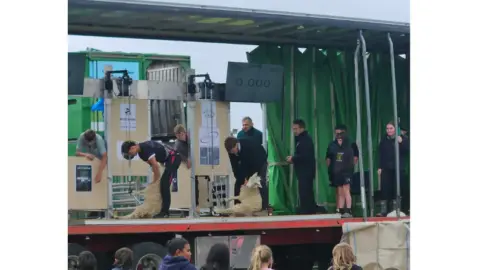
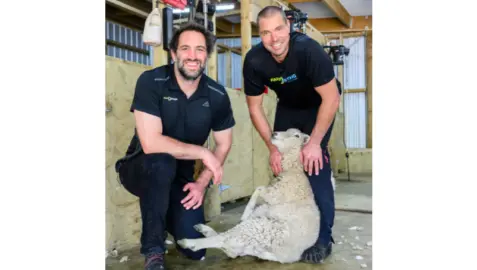
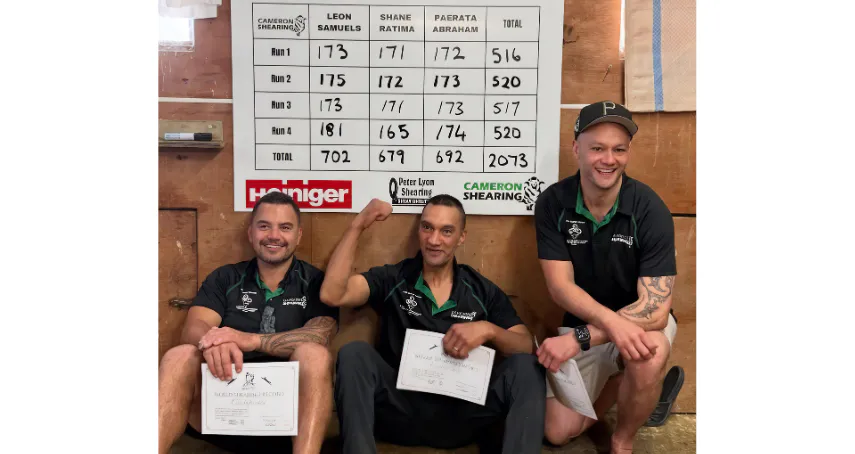
Shane Ratima, Paerata Abraham and Leon Samuels recently set an eight-hour, three-stand, strong wool shearing world record of 2,073 lambs at Moa Flat in West Otago. Farmstrong caught up with Shane about the physical and mental preparation required to achieve such a feat.
Shane Ratima runs a successful shearing business based in Hunterville. He says that his ‘real good day’ was two years in the making and included a failed attempt in 2024.
Shane’s basic prep focused on mobility, strength, and fitness with the help of performance coach Matt Luxton. “Those are the three pillars we worked around. I was carrying a few injuries, so I’d connect with Matt every other week and tweak the programme accordingly to make it work for me.”
He says he measured progress by how quickly he could recover and back up next day doing his regular shearing runs. “My shearing numbers were a good indicator. If your tallies are starting to climb per hour then you know the training is doing its thing.”
Shane also worked on his technique and altered his shearing pattern with the help of expert shearing trainers such as Justin Bell and Luke Mullins. All of which raises the question, why would a busy shearing contractor put his hand up for such a time-consuming and demanding challenge?
“I had no thoughts at all of doing a world record. I thought it was something other people did and you just watched them do it, right?” he admits. “It was one of the previous record holders who suggested I have a go.”
Shane’s first attempt in Hunterville in 2024 ended in failure, but he wasn’t deterred. “That really lit the fire,” says Shane. “It felt like unfinished business and that’s why I went again.”
Shane says the mental aspect of setting a world record is huge. “That was probably the biggest change between my two attempts.”
It was a challenge he took seriously, hiring high-performance sports psychologist Luke Rowe to sharpen his focus. Luke had done a ton of work in rugby, one of Shane’s great passions.
“We spent a lot of time walking round the Manawatu River unpacking what had happened on the failed attempt and what I needed to prepare mentally going into the next attempt.”
“He talked about me ‘lighting matches’ – when you’re in flow and you’re absolutely exerting full energy – how it only happens in bursts and the importance of making the most of those short bursts. If you go out too hard too early, your body just shuts down because you’re maxed out mentally and physically. We talked about saving one or two matches so I could come on stronger towards the end of our record attempt.”
“Another tool was to recognise whether I was using my ‘blue brain’ or my ‘red brain.’ The red brain is emotional part of your brain, and the blue brain is where you control your thoughts. So, you need the right mix to be able to succeed at a challenge like this. You don’t want to be highly emotional and out of control, but you also don’t want to be too cold and overthinking everything either.”
Shane says the key to achieving the right mix at the right moment was breathwork.
“I was wearing a heart rate monitor and used breathing techniques to bring my heart rate and emotional state down quickly. There was one time I was up at 145 beats per minute. So, I walked back into the pen, took three deep breaths and brought it down to 30 beats per minute straight away.”
He says the team’s body language was also discussed. “Your posture has a big effect on team performance. That was something we really worked on, maintaining eye contact with people around you so you’re connecting as a team.”
On the day of the attempt, Shane used muscle relaxation techniques he’d learnt to relieve the pain during his four runs. By the end of the day, they were coming in very handy. ‘I was sore in parts of the body I didn’t realise you could even be sore in, like between my toes!” he laughs.
The whole event was livestreamed adding to the pressures the team faced. Starting at 7am and facing four, two-hour runs, the targets grew as the tallies grew.
“At that point it’s probably more mentally than physically challenging to be honest. It’s not a matter of how fit you are because everyone’s fit, it’s more how fit your mind is and the execution of that mindset.”
Eight hours is a long time. I asked Shane if there was a point where he needed all those skills to kick in.
He smiles. “Sheep are still sheep, aren’t they? Leading into that record, I’d injured my hip, so I was panicking a bit. I’d put up with a bit of pain on the board shearing beforehand just plodding along, but it’s another thing entirely when you’re trying to shear 170 sheep a run. But it was a bit like rugby. Once the whistle goes, you kind of forget about those things and the adrenaline just takes over.”
Luckily for Shane the hip held up and many hours later the team passed the old record with 20 minutes to go and established a new mark, 97 sheep to the better. Shane says breaking the record was a feeling of immense relief for all involved.
“I think it was that fear of not wanting to let anyone down that drove us on. It was definitely a team effort. We had a huge number of people there helping us. The physio worked as hard as we did.”
Looking back on the day, Shane says, “My advice to shearers who want to try something similar is to keep learning and surround yourself with good people. Whether it’s your shearing technique or your mental skills, you can always get better.”
“It’s amazing what you’re capable of once you start that journey, especially when you put your mind to it.”
Farmstrong has teamed up with the NZ Shearing Contractors Assn to launch Live Well Shear Well, a mental wellbeing initiative to support shearers in and out of the shed. For free tools and resources head to www.farmstrong.co.nz/resources/live-well-shear-well
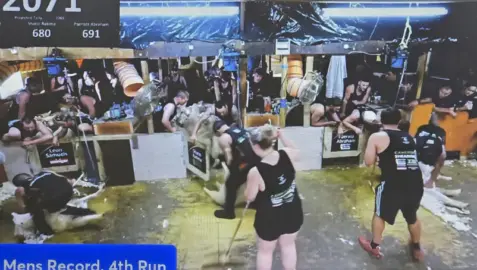
Live stream of the record attempt at Moa Flat in West Otago in February.