Grow People to Grow Crops
Module Overview
Craigmore Sustainables was recently named Regional Supreme Winners at the NZ Farm Environment Trust Awards. Kiwifruit Business Manager Alan Dobbie talks about some of the elements that contribute to their success.
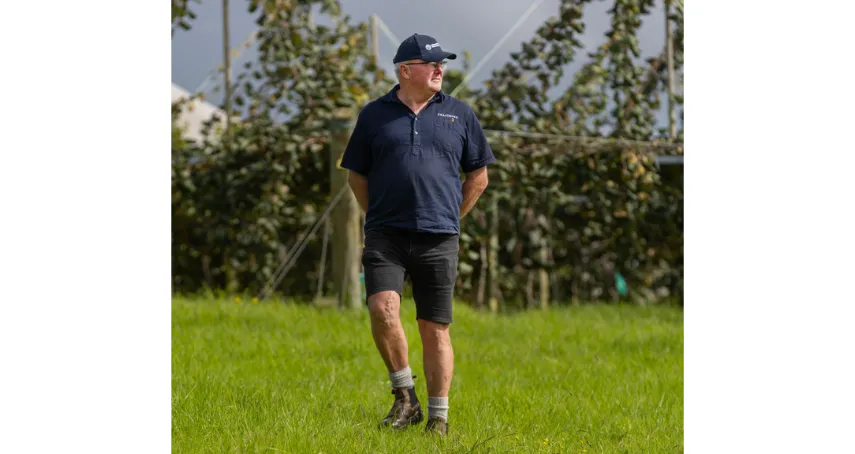
Alan Dobbie grew up on an orchard and has been in the growing business for more than 40 years. These days he lives in Kerikeri in Northland and works for Craigmore Sustainables as their Business Manager for Kiwifruit.
It’s a big job, managing about 300 hectares of kiwifruit both in Northland and the Bay of Plenty. Over the years Alan has developed a philosophy for dealing with the ups and downs that are an inevitable part of horticulture.
“You have to figure out what you can control and what you can’t control. When I first started working for someone else, it used to worry me sick if they didn’t make money. But I can only worry about the things I can control. I can’t control the value of the New Zealand dollar. And I can‘t control whether there is an oversupply or an undersupply of kiwifruit on the planet.
“If I could control those things, I probably wouldn’t be growing kiwifruit. I’d be doing something else, and making a whole lot more money,” he says with a laugh.
The important thing is to be proactive about the things you can control, says Alan.
“If you think you’re going into a drought, you make sure your irrigation’s going as well as it can be, and that you’re putting the water in the right place at the right time and all that sort of thing. So rather than worrying about it, you need to be proactive about the things you can do. When you do that, there’s a paradigm change in your mindset. You know you’re doing the best you can.
“It’s about being solution-based rather than problem-based.”
On a personal level, Alan says exercise is great for relieving the pressures of a stressful day.
“Going for a long bike ride, or climbing the biggest hill I can find, is a big help because by the time you get to the top of the hill, you’ve forgotten about the problem you had at the bottom. Just getting out and doing something different on your own. It’s good headspace time.”
What does he enjoy most about working in the industry these days?
“I enjoy the people now. My tagline is, I grow people to grow crops.
“As one person you can only look after a small area and achieve so much. You’ve got to grow people to grow a business. If you have the ability to do something, train other people to do it.
“Knowledge is power. But it’s only powerful if you share it. If I share my knowledge with you, it becomes twice as powerful. If I share my knowledge with 10 people, it’s 10 times as powerful. I think I’ve spent the last 25 years growing people to grow crops.”
Five minutes in the sun
Alan has his own particular slant on what it takes to grow people. Taking an interest in staff and making them feel part of the business is essential.
“Every day I try and talk to somebody for five minutes. I call it giving them five minutes in the sun. It’s not talking about the job but about how they’re getting on, dreams and aspirations, that kind of stuff. What did your kids do in the weekend? Did you watch the footy? It’s about making them feel valued.”
Alan knows from experience that people often get into horticulture from many walks of life. To build a good team, you have to be able to see the strengths that they bring, he says.
“There’s more to most people than you see when you look at them. They’ve got attributes. What you’ve got to do is let them grow those attributes. Don’t pick on the things people are bad at. Get them to do the things they are good at. Let them get on with it. Make it their baby.”
Creating an environment of trust is essential, he says.
“It’s a lot to do with good communication. When people are vulnerable, they have to be comfortable enough to talk to you about things. For example, if someone breaks the shovel handle and you haul them over the coals, they’re not going to tell you next time they break the shovel handle. They’re going to throw the shovel one way and the handle the other way and hope you’ll never find it.
“So why not talk to them? If something goes wrong and you get alongside people, there’s a good chance they’ll tell you the truth. If you bollock people, they become angry with you.
“For a manager, dealing with staff is more an art than a science. It can be a long-haul thing but the bottom line is you have to make staff feel comfortable when they are working with you.”
Making staff feel valued is obviously something Alan Dobbie is good at. Recently Craigmore Sustainables were the Regional Supreme Winners at the New Zealand Farm Environment Trust Awards. Six of the people who went with Alan to accept the Award began with Alan in 2019 when the business was first established in Kerikeri.
“They were people off the street and now they hold key roles in the business. The staff have made it all possible, they’ve grown in leaps and bounds.”
Light footprint
Sustainability is an important focus for the business, says Alan. They’ve introduced a number of innovations which help the business have “a lighter footprint on the planet”.
“We try to be reasonably sustainable with whatever we do. This property in Kerikeri is about 80 hectares and we have about 30 hectares of native plantings. That’s been great for getting a different range of insects in. The hoverflies are actually a more efficient pollinator of kiwifruit than bees.
“We’ve also made a substantial investment in irrigation and fertigation on the property. The benefits of our irrigation are that we are pulsing the water, and so we are finding that we are getting better movement laterally rather than vertically. We feel that gives us better root development.
“We can put on fertiliser when and where it is required, so we can put on very small applications. That means there’s very little leeching of the fertiliser, so it all basically gets used.”
In the sustainability space, there is always room for improvement, says Alan.
“But if we look at the stuff we’ve done and the challenges that we have overcome, I think it’s something to be really proud of. It’s really exciting to see.”