Do The Things That Keep You Well
Module Overview
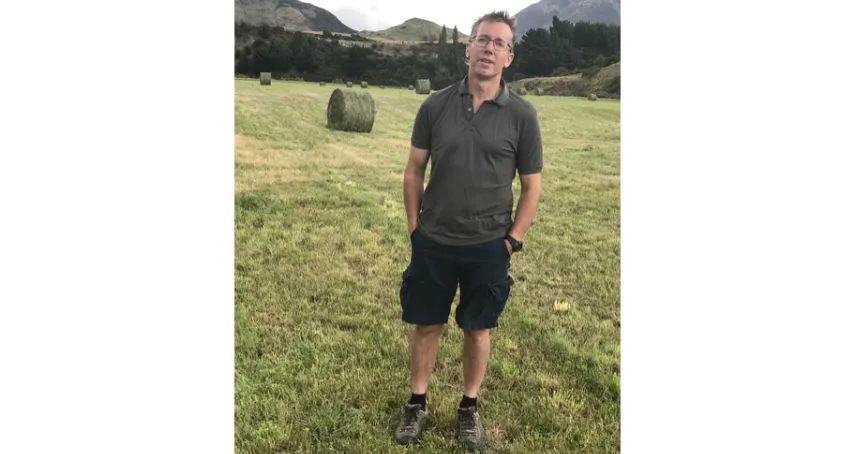
A lot of farmers and growers support Farmstrong, but sheep and beef farmer Jack Cocks has gone a step further and incorporated many of its ideas into his farming practice.
Jack’s been a Farmstrong advocate for many years and often speaks on its behalf. There’s a reason for that. He’s known great adversity in his own life – a long-haul recovery after a devastating stroke.
Jack and his wife Kate run Mt Nicholas station near Queenstown. They work with a small team to manage its 35,000 stock units across 36,000 hectares and run an associated business selling some of Mt Nicholas’ merino wool in a range of clothing.
So, Jack’s life is plenty busy, but this is someone who no longer takes their health for granted. In fact, Jack makes a conscious effort each day to look after himself, despite the demands of work. Here’s what he does to stay well.
‘Look for the good in each day.’
“I’ve learnt the value of practicing gratitude. Regardless of how good or bad your day’s been, you’ll always have two or three or four things that have gone well. So, I consciously ask myself at the end of each day, ‘What went well today? What can I be grateful for?’ I’m not talking about the big stuff like my family or the All Blacks winning the world cup or living in NZ, I’m talking about the small things that make up a day. The things that are easy to take for granted and we often overlook.”
“You might have cooked a great meal for your family, or maybe the ewes are in great order, or you’ve got the kale in early, or one of your kids has achieved something great at school, or someone’s given you a nice piece of feedback. Those are all things to notice and celebrate.”
What difference does practising gratitude make to Jack’s farming?
“There’s a lot of scientific evidence that says if you acknowledge and focus on what’s gone well every day, you’ll start rewiring your brain to focus on the good things and overcome the in-built negativity bias in our thinking. This negativity bias was useful to help humans survive when we were cave men – it meant we could avoid lions eating us – but it’s not so helpful now. Constantly worrying about the weather or exchange rates or shipping issues is not always going to help us farm better.”
“So what I do every night, before I go to bed, is write down three things that have gone well. I think giving yourself a dose of optimism like that every day is really healthy and very powerful.”
“What I’ve found is that if you focus on what’s gone well for the day, in quite a short space of time, like a month, you start reprogramming your brain to focus on the positive rather than the negative. And farming in a good, positive headspace is a great asset for the farm, your family, and the people you deal with. Every day has its ups and downs, but no matter what happens during your day, ask yourself at the end of it, what went well?”
‘Focus on the process rather than the result.’
“This is an idea I got from professional sport after reading the biographies of three or four top sportsmen. They all talked about the importance of the process and the performance as opposed to the result. You follow the process and get your performance right and the result just takes care of itself. You’ll win the game.”
How does this apply to farming?
“So, if you put the ram out at the right time, you make sure your ewes are in good condition, take care of all their animal health, feed them well, lamb them on good cover, appropriate blocks and appropriate stocking rates, and you’ve got good genetics. If you follow all those processes, all those little things, then as long as the weather’s half decent, you’ll get a good lambing. Instead of focusing on the result, you’re getting satisfaction out of all the small things that lead up to it.”
Jack says that approach was a huge help in his health recovery. “When I was recovering from my stroke, I just focused on the process. If I got adequate rest, if I did my exercises properly every day, and kept in a positive mindset, I knew eventually I’d walk in a straight line again!”
That insight still helps keep his life in perspective today.
“Sometimes in farming we set ambitious targets, which we do need to do. Constantly focusing on them can feel overwhelming though and stress you out. We all need goals in life, but you can’t be completely fixated on them and still perform well. And you can’t be put off if you don’t totally achieve them either,” he notes.
“There’s always that element of luck in farming and plenty of variables like the weather that are out of your control. You might have wanted a 15-tonne kale crop, but you only got a 10-tonne crop. But if you hadn’t done all those little process things properly you might have only got a 5-tonne crop. So that’s still a win and a great effort.”
‘Do the things that keep you well.’
Five years ago, Jack completed a Kellogg study into what makes a resilient farmer. He’s delivered more than 50 talks on the topic since. He concluded there were three attributes resilient farmers had in common. Number one – they had a strong sense of purpose.
“If you’ve got strong purpose and know why you’re doing what you’re doing, then even if things are tough, with the weather or the economy, it’s still easy for you to get up every morning at 4 o’clock and milk the cows, or it’s easy for you to do an all-nighter getting your kale in before it rains. You know your why and that’s what gets you out there and gets you through tough times.”
“My ‘why’ is to support my family and make a difference. That’s why I’m talking to you today!”
Which brings us to point number two – resilient farmers also have a strong sense of connection with others.
“We all need our support crew, so make sure you have one. Who are the people around you who can help you through adversity? Your friends, family, your business network, your on-farm workmates. They’re the people you turn to when you’re in a time of challenge that help you through.”
We ask Jack who farmers can talk to when things aren’t going well. “My experience in farming is that if you’re feeling under the pump and you get in touch with somebody and ask for help, most people will want to help you. And if they don’t want to help, ask somebody else. In farming, as in all walks of life, a problem shared is a problem halved. It’s as simple as that.”
Which just leaves the final foundation of resilience according to Jack – wellbeing. ‘What do I need in my life to keep me happy and well?’
“I used to say to farmers when I did these talks to ask themselves, ‘when you’ve been happy, well, and functioning well, what have you had going on in your life? That’s wellbeing. What are the things that fill your cup and keep you functioning well? It could be anything – sport, a hobby, a pastime, a favourite place or a group of mates. For me it’s having good connection with people, doing some exercise, and having some mental stimulation. So, I try and get those three things into every day.”
We finish our chat by exploring what difference all this makes to a farming business.
“It makes a big difference across the board, oh, 100%. If you’re fit and strong and in a positive frame of mind, you’ve got more energy, and you’re going to make better decisions. If you’ve got a higher level of wellbeing, you’re going to be a better person to be around, you’ll do a better job, and you’ll achieve more. Fundamentally, at the end of the day, you’re going to be a better and more resilient farmer.”