Strong businesses put people first
Module Overview
Looking after people is not separate from running a successful farming business, but can help people manage pressure, make good decisions and perform at their best, says Irrigation New Zealand chief executive Karen Williams.
Farmers and growers are accustomed to looking at the whole system when considering the resilience of their land and businesses, Karen said, adding that people need to be included in that picture.
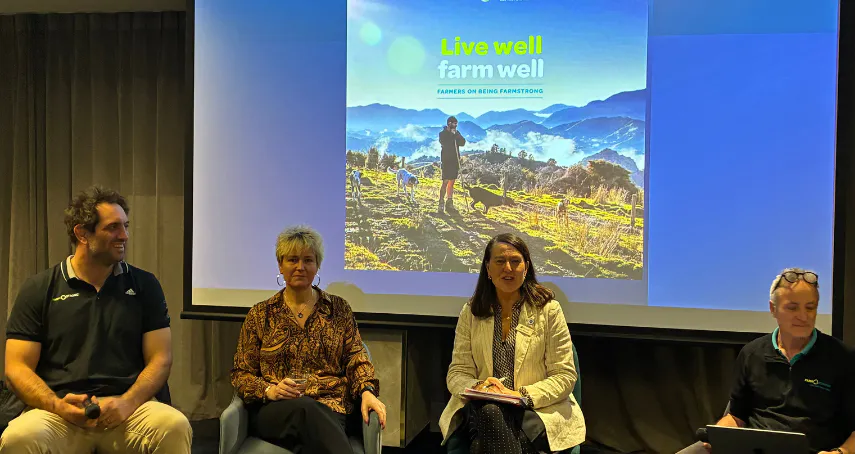
Karen joined Farmstrong ambassador Sam Whitelock and Scarlatti principal Dana Carver for a panel discussion at the New Zealand Farm Environment Trust Leadership Summit in Ōtautahi Christchurch in July. The discussion explored how the same thinking used to build resilient land and businesses can also help build resilient people.
In addition to her role at Irrigation New Zealand, Karen and her husband, Mick, run an irrigated mixed cropping, beef and lamb-finishing farm in the Wairarapa. They were Supreme Winners of the 2013 Greater Wellington Ballance Farm Environment Awards.
Karen has also held leadership and governance roles across the primary sector, including with Federated Farmers and the New Zealand Farm Environment Trust. She said her experience had shown her that a strong business depended on people having the support and capacity to do their jobs well.
She said performance on farm was not only about production, systems or financial results, but was also influenced by how people were feeling, how well they were kept informed and whether they felt safe contributing ideas.
Small breaks make a difference
Karen told attendees that supporting people did not always require a formal wellbeing programme or a serious conversation.
On farm, she brings her team together at the local café for good coffee and pies, while at Irrigation New Zealand she has introduced a regular online quiz to break up the day and encourage the team to take time out from work pressures.
For a short time, people stop thinking about the farm, the weather or submission deadlines and have an opportunity to laugh, relax and connect with one another, she said.
Karen said she could see people’s shoulders drop.
Although it might feel like a “forced break” during a busy day, she said that small pause could provide a valuable release from pressure and help strengthen the relationships people relied on when work became demanding.
This was particularly important in farming and growing, she said, where financial uncertainty, extreme weather, long hours and supply-chain disruptions could place sustained pressure on owners, managers and staff.
Karen said the sector needed to keep looking for practical ways to build care into everyday working life.
“That might include a shared morning tea, an environmental planting day, time away from the farm or an activity that involves the team’s families. It can also be as simple as noticing someone’s effort and acknowledging a job well done.
“These moments help people feel seen and valued. Over time, they can also build a more connected and capable team.”
Begin with a shared problem
Wellbeing initiatives were more likely to work when they responded to something the team genuinely cared about, Karen said.
A useful first step was to ask people what would make their work or workplace better. The team could then explore the problem together and consider what might make a difference, she said.
“If you want really good buy-in, you need to let people contribute ideas and have a crack at something.”
Karen said the people doing a job often had valuable insight into how it could be done better. Involving them in finding solutions could also give them greater ownership of the outcome, she said, making wellbeing part of solving a shared problem rather than another task handed down by a manager.
Not every issue could be approached this way, she acknowledged, with some areas of farming involving firm safety, legal or operational requirements. However, she said there was still plenty of room to invite ideas and test different approaches.
Create a safe place to try
Trying something new could feel risky, particularly when people were already under pressure, Karen said, adding that the way an idea was introduced could make a significant difference.
Rather than presenting an idea as a perfect solution, she suggested describing it as something the team could explore.
“Don’t set yourself up to fail… set the narrative on exploring this idea. It may not work, but let’s give it a shot.”
Karen said framing an idea as an experiment gave people permission to try, learn and make changes along the way.
Sam Whitelock told the panel that failure could provide an opportunity to learn because it could force people to try something new. The important part was to talk about what happened and use the experience to improve, he said.
Dana Carver agreed, saying the real achievement being celebrated was the willingness to try and that an unsuccessful result did not necessarily mean the effort had been wasted.
Karen said she would rather give a promising idea a chance than stop experimenting because it might not work.
“Even if it doesn’t work, we will have learnt something from it.”
She said creating that sense of safety could encourage people to speak up earlier, offer solutions and take greater responsibility for improving the business.
Look beyond the farm gate
It could be difficult to see new options when a team had been dealing with the same issue for a long time, Karen said, and outside perspectives could help challenge established ways of thinking.
She recalled being involved in an agricultural business discussion group where people could test ideas and receive advice and support.
“We’re all influenced by the environment we’re in, so bringing in fresh ideas from outside can be quite exciting.”
Karen said a discussion group, neighbour, adviser or rural professional might see possibilities that people inside the business had overlooked.
Outside support could also give someone the confidence to continue with a sound decision, she said. Sometimes the value was not in being told to change course, but in hearing that the direction already being considered made sense.
For Karen, asking for another perspective was not a sign that someone could not solve their own problems, but a practical way to make a more informed decision.
Wellbeing is a shared responsibility
Karen said she would like to see the rural sector take a more joined-up approach to supporting people.
While Farmstrong and the Rural Support Trusts had important roles, she said responsibility sat throughout the agri sector, including with university programmes, banks, co-operatives, industry organisations and government.
Environmental performance was now recognised in business and lending decisions, she said, and the sector should similarly encourage a culture where caring for people was seen as an integral part of running a successful farming business.
“This philosophy permeates the Ballance Farm Environment Awards programme, where economic, environmental and social outcomes are all recognised as important measures of success.”
Karen said Rural Support Trusts also needed reliable resources so they could respond quickly when adverse events affected rural communities.
She pointed to recent storm damage in the Wairarapa, where the Rural Support Trust team needed aircraft to assess the extent of the damage across isolated eastern hill country.
“Waiting until people are already in crisis is not enough. Strong support systems need to be in place before they are needed.
“This includes preparing the next generation to manage the mental and physical demands of rural work, supporting successful farm succession and helping farmers nearing retirement step back safely when the time is right.”
Summing up people power
Karen said giving people opportunities to rest, connect and contribute left them better placed to manage pressure and make good decisions. When people felt safe bringing forward ideas, she said, businesses could also benefit from their knowledge and experience.
“Putting people at the centre does not need to begin with a large programme. It can begin with a coffee, an honest question or 10 minutes away from the job.
“The useful question for any farming business is simple: what would make this a better place for our people to work?”